
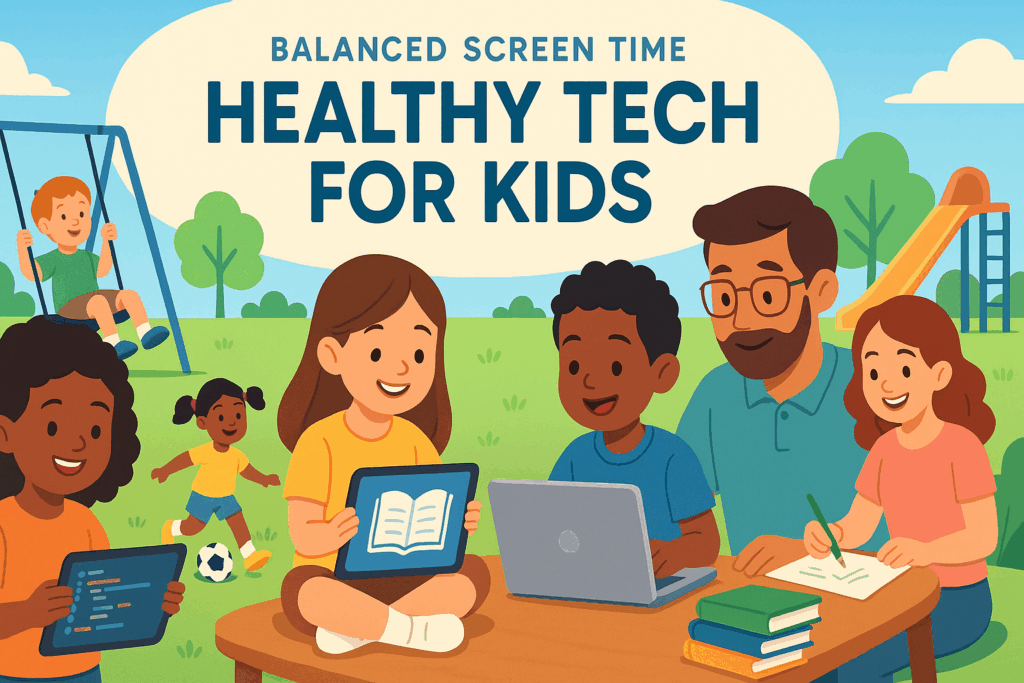
Introduction
In today’s digital age, technology is an integral part of our lives—and our children’s lives. From educational apps to social media, screens are everywhere. While technology offers incredible learning opportunities, excessive use can lead to negative consequences. As parents and educators, it’s time to rethink how we integrate technology into our children’s lives to ensure a healthy, balanced approach.
The Benefits of Technology for Children
Technology, when used mindfully, can be a powerful tool for growth:
✅ Enhanced Learning – Interactive apps and e-learning platforms make education engaging and accessible.
✅ Creativity & Problem-Solving – Coding games, digital art, and STEM tools foster innovation.
✅ Global Connectivity – Kids can interact with diverse cultures and ideas, broadening their perspectives.
✅ Skill Development – From typing to critical thinking, tech-savvy children gain future-ready skills.
The Risks of Excessive Screen Time

Despite its advantages, unchecked technology use poses risks:
❌ Reduced Physical Activity – Excessive screen time leads to sedentary lifestyles, contributing to obesity.
❌ Sleep Disruption – Blue light from screens interferes with melatonin production, affecting sleep quality.
❌ Attention & Behavioral Issues – Overstimulation from fast-paced content can shorten attention spans.
❌ Social & Emotional Challenges – Less face-to-face interaction may hinder emotional intelligence development.
❌ Exposure to Inappropriate Content – Without supervision, kids may encounter harmful material online.
Finding the Right Balance: Practical Tips for Parents
How can we ensure technology benefits our children without overwhelming them?
1. Set Clear Screen Time Limits
- Follow the American Academy of Pediatrics (AAP) guidelines:
- Under 18 months: Avoid screen time (except video calls).
- 18-24 months: Limited high-quality programming with parental involvement.
- 2-5 years: 1 hour per day of educational content.
- 6+ years: Consistent limits, ensuring tech doesn’t replace sleep, play, or family time.
2. Encourage Active Screen Time
- Choose interactive, educational apps over passive consumption (e.g., Duolingo, Khan Academy Kids).
- Promote creative tech use—coding, digital storytelling, or music production.
3. Create Tech-Free Zones & Times
- No screens during meals or before bedtime.
- Designate device-free play areas to encourage offline activities.
4. Be a Digital Role Model
- Children mimic adult behavior. Practice mindful tech use by limiting your own screen time.
5. Teach Digital Literacy & Safety
- Educate kids on online privacy, cyberbullying, and critical thinking about digital content.
- Use parental controls to filter inappropriate content.
6. Prioritize Real-World Interactions
- Encourage outdoor play, reading physical books, and family bonding without screens.
Conclusion: A Mindful Approach to Tech
Technology is neither good nor bad—it’s all about how we use it. By setting boundaries, choosing quality content, and fostering a balanced lifestyle, we can help our children harness technology’s benefits while minimizing its drawbacks.
What’s your approach to managing your child’s screen time? Share your thoughts in the comments!