
A Blog by Omkilkari Child Development Centre
If you’ve ever found yourself calmly talking a frustrated friend off a ledge or patiently supporting a partner through a bad day, only to later feel completely unravelled by your own child’s seemingly inexplicable tantrum or mood swing, you are not alone. This experience is one of the most universal, and humbling, facets of parenting.
Why is it so much easier to handle my partner’s or friend’s mood swings than my own child’s?
The question echoes in the minds of countless parents. The answer lies in a complex mix of biology, expectation, and deep, profound love. With adults, we engage from a place of equality. We can rationalize, use logic, and offer support from a slight emotional distance. But with our children, it’s different. Their emotions are raw, immediate, and primal. Their struggles feel like our struggles. Their tears break our hearts in a unique way. We feel a primal responsibility to fix it, and when we can’t immediately decipher the code, we feel we’ve failed.
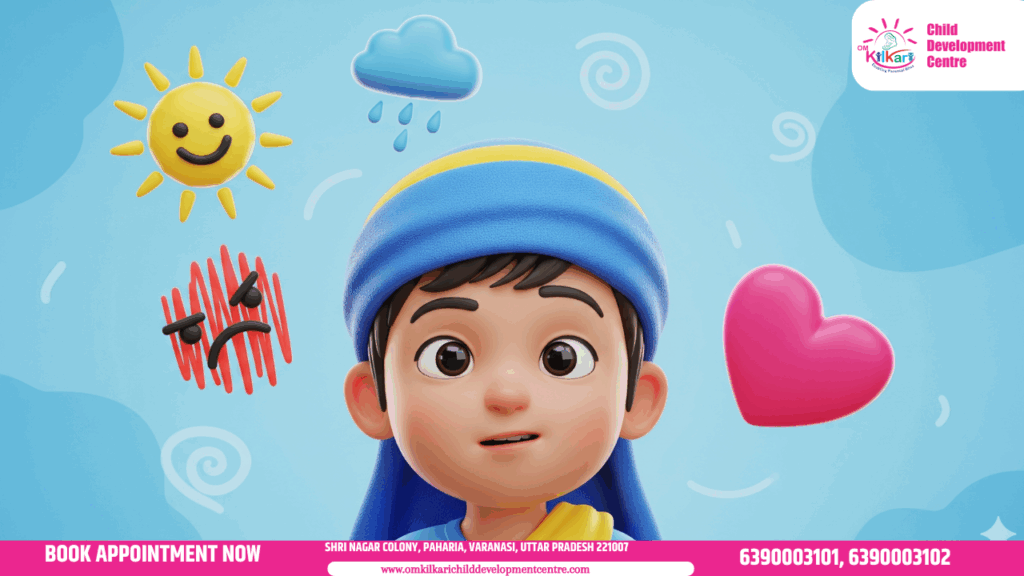
Do you often feel like giving up while trying to crack the code to your child’s complicated emotional alphabet?
This feeling of helplessness is a sign not of failure, but of how deeply you care. The good news is that the code can be cracked. It doesn’t require a psychology degree—it requires presence, patience, and a new lens through which to see your child’s behavior.
Here’s the truth: Your little explorer is just as confused as you are about these new, big feelings they’re experiencing. Their brain is still under construction, specifically the prefrontal cortex—the part responsible for rational thought, impulse control, and emotional regulation. They are navigating a tidal wave of sensations, desires, and frustrations with a neurological toolkit that is only half-built.
And that is where you step up as their superhero. It’s simple; you’re their compass, helping them navigate through the emotional seas, guiding them through the ups and downs. You are not the captain of their ship; you are the steady North Star by which they can learn to steer themselves.
But before we dive in, there is something you should keep in mind: Every child is unique in their own way.
Think of them as the various dishes on an Onam Sadya leaf. Each one of them takes a different amount of time to prepare, and while they have a lot of similar ingredients, they taste totally different from one another. Parippu Vada has a crisp, fiery urgency, while the sweet, creamy Payasam needs to simmer slowly. You cannot apply the same heat or timing to every dish and expect perfection. Similarly, you cannot compare your child’s emotional journey to that of their sibling, their cousin, or the seemingly “perfect” child in their playgroup. Their temperament, their pace of development, and their expressive style are theirs alone.
Most often, children like to choose the most ambiguous ways to express their emotions, leaving us completely clueless in the process — And that’s okay. A meltdown in the grocery store isn’t about the candy bar you said no to; it’s the culmination of a long day, a missed nap, an overwhelming sensory environment, and the crushing disappointment of that candy bar. The cryptic drawing, the sudden clinginess, the aggressive play—these are all messages in a bottle, waiting to be opened and understood.
You’ve either only begun the journey of parenting your little one, or you’re in a mess struggling to catch up with them. But it’s never too late to connect with them. Every move is a fresh start. Every interaction is a new opportunity to say, “I see you. I hear you. I am here.” (Trust me, you’ll get there.)
This mini-guide from the team at Omkilkari wishes to be your friend on this journey. Let’s learn to listen not just to their words, but to their entire being.
Chapter 1: The Foundations of Emotional Connection
Why the Long Face? The Power of Non-Verbal Cues
The first step in understanding is often the easiest, yet the most overlooked: reading the face. At the innocent phase of their lives, children are not yet accustomed to the idea of hiding emotions with a “mask” (or a forced smile) as we are. Their facial expressions are stunningly honest barometers of their internal weather. A genuine, crinkly-eyed smile indicates pure happiness. A furrowed brow and downturned mouth indicate anger, confusion, or sadness. Their face is the first page of the story.
This isn’t just observational; it’s biological. We are hardwired for this connection. Mirror neurons in our brains fire not only when we perform an action but also when we see someone else perform that same action. This is the foundation of empathy. When you smile at your child, they are neurologically primed to smile back. This simple, nonverbal interaction—a shared smile, a widened expression of surprise, a sympathetic frown—ensures the first step to a smooth flow of information and co-regulation. It tells them, “Your feeling is felt by me. We are connected.”
Don’t See; Observe: The Art of Presence
Seeing is passive. Observing is active. It’s the difference between looking at a tree and noticing the specific pattern of its bark, the way its leaves tremble in the wind, the type of birds nesting in its branches.
To understand your child, you must move from seeing to observing. This means paying close attention to your child’s entire body language, their micro-expressions, and the subtle shifts in their energy.
- Is she fidgeting? This could signal anxiety, boredom, or a need for sensory input.
- Is he avoiding eye contact? This might indicate shame, guilt, or simply a need to process internally without the intensity of a direct gaze.
- Are her fists clenched? A clear sign of suppressed anger or frustration.
- Is his posture slumped? Perhaps a sign of sadness, fatigue, or low self-esteem.
The foundation of understanding stems from your presence of mind. The moment you catch a sight of any of these expressions, pause. This is the most crucial and difficult step in our distracted world. Drop your phone, put down the dishcloth, turn away from the laptop, and get down to their eye level. Focus on them and them alone. This single act of prioritizing them over everything else for just two minutes is more powerful than a dozen half-listened-to conversations. It telegraphs one undeniable message: You are the most important thing to me right now.
Chapter 2: The Language of Play: Your Child’s Inner World Unveiled
Play is not a break from learning; it is the fundamental work of childhood. It is the primary language through which children process their experiences, explore their identities, and make sense of the world. The best and most interesting time to study your child is during their unstructured playtime. Notice everything.
Notice their choice of toys: Does they gravitate towards aggressive dinosaurs, nurturing dolls, constructive blocks, or creative art supplies? Preferences can offer glimpses into their current preoccupations and inner strengths.
Notice the way they interact with others: This is where we see the beginnings of social personality. We can often see a few broad patterns emerge, though these are fluid and can change:
- The Leave-Me-Alone Player: Some children prefer to play alone, deeply immersed in their own intricate worlds. This isn’t to be seen as a negative trait. They are often introverted, deep thinkers, highly creative, or simply need quiet time to recharge their social batteries from a stimulating world. Honor this need; it is a strength, not a deficit.
- The More-the-Merrier Player: These children are our budding social butterflies. They have an inherent desire to connect with others. They engage in cooperative play, negotiate rules, and use their social skills to express feelings of belonging and teamwork. They are energized by the group.
- The Boss Player: There are children who exhibit dominant behavior, such as bossing others around or taking control of the game and the toys. While this can be challenging for playmates, it’s important to look beyond the behavior. This need to assert control may arise out of insecurities, a lack of control in other areas of their life, or simply a natural leadership tendency that needs guidance to become collaborative rather than dictatorial.
- The Pretend-Player: This is perhaps the most rich territory for understanding. Socio-dramatic play, or role-playing, is a giant window into your child’s soul. When they play “house,” “school,” or “superhero,” they are experimenting with different roles, rehearsing social scenarios, and processing complex emotions. A study by Rubin et al. found that children who engaged in these complex forms of pretend play were more likely to exhibit empathy, prosocial behaviors, and positive emotional adjustment. They are literally practicing for life.
Listen to the themes their stories revolve around: Are their play narratives full of rescue and heroism? Are there themes of being lost or chased? Are they reenacting a recent visit to the doctor? The stories they create are direct reflections of the things that are occupying their minds, both the joyful and the worrisome.
Chapter 3: The Master Key: Active and Empathetic Listening
Now that the show is on, the most crucial part of your role is right here – Active listening. This is the master key that unlocks trust and connection. It’s not just about hearing the words; it’s about receiving the entire message.
How to become an active listener:
- The Physical Foundation: Get down to their level. Look into their eyes. Put your phone in another room. Your body should be oriented towards them, showing you are fully available.
- Listen to Understand, Not to Respond: We often listen with half an ear while formulating our advice or solution. Stop. Let them finish their thought, however rambling or slow. The pause after they finish is where the magic happens—it allows them to add more and shows you are not rushing them.
- Ask Clarifying Questions: “So, what I think I heard is that you felt really left out when Maya didn’t share the crayons? Is that right?” This shows you are tracking and ensures you’re not misunderstanding.
- Paraphrase and Reflect Feelings: This is the heart of it. “It sounds like you’re feeling really frustrated and hurt.” Or, “Wow, that must have made you feel so proud!” You are giving them the vocabulary for their emotions and validating their experience. You are holding up an emotional mirror.
But Why You? The Science of Attachment
This isn’t just touchy-feely advice; it’s grounded in decades of psychological research. John Bowlby’s Attachment Theory tells us that humans are born with a biological need to form strong, lasting bonds with their primary caregivers. These early bonds form the foundation for all future emotional development, social relationships, and mental health.
When you actively listen to your child, when you respond to their cries and their giggles with sensitivity and consistency, you are building a secure attachment. A securely attached child internalizes a powerful belief: “My caregiver is my safe harbor. I am worthy of love and protection. The world is a generally safe and predictable place.” This secure base gives them the confidence to explore the world, knowing they can always return to your emotional support. This influence doesn’t end in childhood; it continues to shape their ability to form healthy attachments as adults.
Chapter 4: Tools for the Journey: Practical Strategies for Every Parent
The Emotion Chart: Naming the Storm
Young children experience emotions as overwhelming physical sensations. They don’t say, “I am experiencing heightened levels of frustration because my goals are being thwarted.” They feel a hot, buzzing, out-of-control feeling and they scream.
You can help them tame this storm by giving it a name. “It sounds like you’re feeling really frustrated.” “I see that you are disappointed we have to leave the park.” “It’s okay to feel angry.”
Use tools to make this concrete. Create an “Emotion Chart” together with faces showing happy, sad, angry, scared, surprised, and tired. When they are upset, gently guide them to point to what they’re feeling. This does three things: it validates the emotion, it separates the feeling from their identity (I am angry vs. I feel angry), and it provides a moment of pause that begins to build self-regulation.
The Power of Validation: “I Get It”
Validation is not the same as agreement. You can validate the feeling without validating the behavior.
- Scenario: Your child is crying because you gave them the blue cup instead of the red one.
- Invalidating Response: “Don’t cry over something so silly! It’s just a cup.”
- Validating Response: “You’re really upset about that cup. You wanted the red one and it’s disappointing to get the blue one. I get it.”
The second response acknowledges their internal world. It tells them their feelings are legitimate. This validation is what Eisenberg et al.’s research pointed to: parents who were emotionally responsive raised children who were more socially competent, emotionally adjusted, and empathetic. When feelings are validated, children learn to trust their own emotional compass and are more likely to seek your support rather than hide their problems from you.
Bring Out the Picasso: Art as a Emotional Release Valve
For children, especially those who are less verbal, art is a lifeline. It is a free, safe, non-judgmental world where any feeling can be expressed. Whether they’re happy, sad, angry, or scared, the act of moving a crayon across paper, squeezing clay, or splashing paint is inherently therapeutic. It allows for the externalization of big, internal feelings.
Don’t focus on the product; focus on the process. You can ask gentle, curious questions: “Tell me about your drawing.” “I see you used a lot of dark red here. What were you thinking about?” Their doodles or paintings could reveal tonnes of untold emotions about school, friendships, or fears they can’t yet articulate. Plus, the cognitive benefits are immense—experimenting with different materials and techniques boosts problem-solving skills, fine motor skills, and creative thinking.
Always Keep Track: Noticing the Shifts
Be a gentle detective of your child’s well-being. Be aware of significant or persistent changes in their behavior. These are often signals that something beneath the surface needs attention.
- Are they becoming more withdrawn or irritable?
- Have they become unusually clingy or dependent?
- Are there changes in their eating or sleeping patterns?
- Have they lost interest in activities they once loved?
These changes may indicate underlying emotional issues like anxiety or sadness. They can also be a response to external stressors like social pressure (e.g., bullying), academic challenges, or tension at home. Noticing these shifts early allows you to step in with support, open a conversation, or seek professional guidance if needed.
Leave the Door Open: Cultivating an Open-Mic Culture
Do their questions ever surprise you or leave you in thoughts? “Why is that man sleeping on the street?” “What happens when we die?” “Why do you have to go to work?”
An open-mic culture is what you should aim for. This means consciously forgetting cultural nuances and expectations that sometimes limit children’s liberty to think out of the box. If society finds your child’s innocent questions disrespectful, turn it around by welcoming them with good, rational, age-appropriate answers. While teaching manners is important, they are not wrong to expect a supportive, non-shaming environment where they feel comfortable expressing their curiosity, their doubts, and their emotions without fear of judgment or dismissal. The message should always be: “No topic is off-limits. You can ask me anything.” This builds a lifelong channel of communication that will be invaluable during the teenage years.
Chapter 5: The Ultimate Goal: Building Resilience
Your mission is not to protect your child from every disappointment or hardship. This is impossible and ultimately detrimental. Your true mission is to be their guide as they learn to navigate these challenges themselves.
Look at every problem in their lives—a lost toy, a friendship quarrel, a failed test—as an opportunity to slowly teach them life. This is how you build resilience: the ability to bounce back from setbacks and adversity.
- Coach, Don’t Fix: Instead of immediately solving the problem, ask coaching questions. “What do you think you could do about that?” “How did that make you feel?” “What’s one thing we could try?”
- Teach Coping Skills: Equip them with their own toolkit for managing big emotions. This could be through physical activity (running, dancing), quiet time (reading, cuddling), creative expression (art, music), mindfulness (simple breathing exercises: “smell the flower, blow out the candle”), or connecting with nature.
- Foster a Growth Mindset: Praise the effort, not just the outcome. “You worked so hard on that project!” instead of “You’re so smart!” This teaches them that abilities can be developed through dedication, which helps them view challenges as opportunities to grow rather than insurmountable threats.
This will equip them with their own set of problem-solving skills, help them navigate their own way of coping, find their happy place, and foster a mindset that sees failure not as an endpoint, but as a stepping stone.
Conclusion: You Are Their Enough
This journey of understanding your child’s emotional world is a long one. It is messy, confusing, and often exhausting. But it is the most truly rewarding work you will ever do.
Remember two things:
- You are not alone. Every parent feels lost sometimes. Seek community, talk to other parents, and remember that the team at Omkilkari is always here to support you.
- Every child is unique. Your child’s Sadya leaf is their own. Do not compare their journey to anyone else’s. Patience is key, and empathy will follow.
You are here, reading this article on how to connect with your child, which in itself is half the effort needed to get closer to your little one. It proves your commitment, your love, and your desire to be the best parent you can be.
You are doing your best. And for your child, you are enough. You are their safe harbor. You are their North Star. You are their superhero. Now, go forth and decode that beautiful, complicated, wonderful emotional alphabet, together.