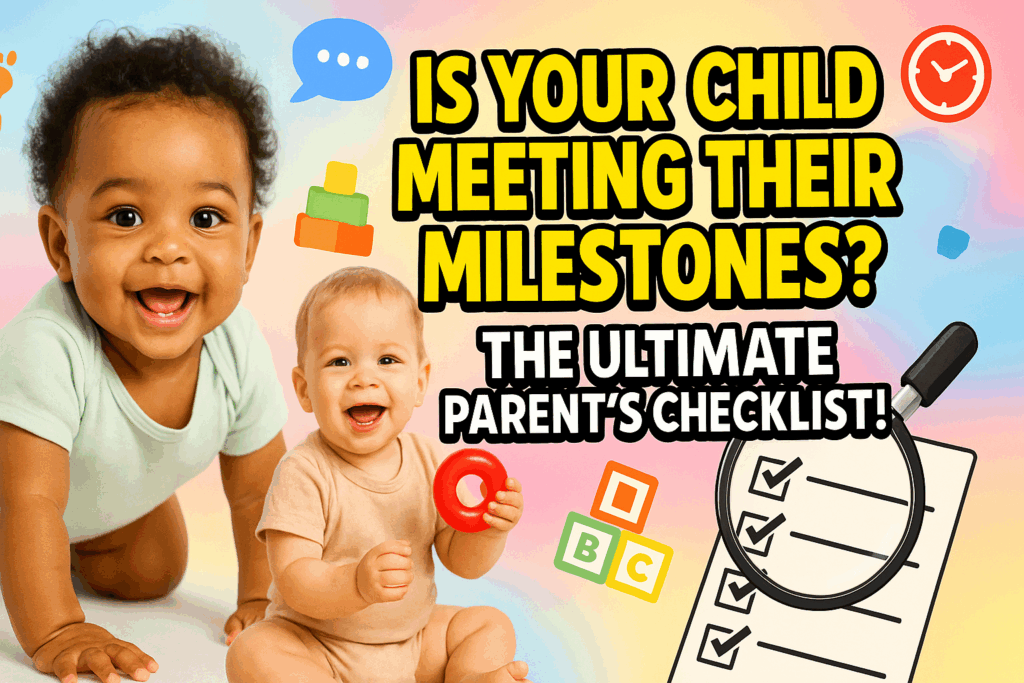
As a parent, one of your biggest concerns is ensuring your child is growing and developing as they should. Tracking developmental milestones helps you understand whether your child is on the right path or if they might need extra support.
This comprehensive guide will walk you through key milestones from birth to age 5, provide a checklist for each stage, and offer tips on what to do if you have concerns.
Why Developmental Milestones Matter
Developmental milestones are skills or behaviors most children can do by a certain age. They cover:
- Physical development (motor skills like crawling, walking)
- Cognitive development (thinking, problem-solving)
- Communication (speech, understanding language)
- Social and emotional skills (interacting with others, expressing emotions)
Tracking these helps identify potential delays early, allowing for timely intervention if needed.
Milestones Checklist by Age
Newborn to 3 Months
At this stage, babies are adjusting to life outside the womb. They rely heavily on reflexes but start developing early skills.
Physical Milestones:
- Lifts head briefly when on tummy
- Moves arms and legs in a jerky way
- Begins to bring hands to mouth
- Starts to follow objects with eyes
Cognitive Milestones:
- Recognizes familiar voices and sounds
- Shows interest in faces
- Begins to track moving objects
Communication Milestones:
- Coos and makes gurgling sounds
- Cries differently for different needs (hunger, discomfort)
- Smiles in response to people
Social/Emotional Milestones:
- Begins to develop a social smile
- Enjoys eye contact
- Starts to self-soothe (sucking on fingers)
Red Flags (Consult a doctor if your baby):
- Doesn’t respond to loud sounds
- Doesn’t focus on nearby objects
- Doesn’t smile at people by 2 months
4 to 6 Months
Babies become more interactive, developing stronger motor and social skills.
Physical Milestones:
- Rolls from tummy to back and back to tummy
- Sits with support
- Reaches for and grasps objects
- Brings objects to mouth
Cognitive Milestones:
- Recognizes familiar people
- Shows curiosity about objects
- Responds to affection
Communication Milestones:
- Babbles with different sounds (“ba,” “da”)
- Laughs and squeals
- Responds to name
Social/Emotional Milestones:
- Enjoys playing with caregivers
- May show stranger anxiety
- Expresses happiness and frustration
Red Flags:
- Doesn’t roll over in either direction
- Doesn’t laugh or squeal
- Seems very stiff or floppy
7 to 12 Months
This is a period of rapid development—babies may start crawling, standing, and even saying their first words.
Physical Milestones:
- Sits without support
- Crawls or scoots
- Pulls to stand
- May take first steps
Cognitive Milestones:
- Finds hidden objects easily
- Imitates gestures (waving, clapping)
- Uses objects correctly (drinking from a cup)
Communication Milestones:
- Says simple words (“mama,” “dada”)
- Responds to simple requests (“Come here”)
- Uses gestures (pointing, shaking head “no”)
Social/Emotional Milestones:
- Shows attachment to caregivers
- May have separation anxiety
- Plays simple games (peek-a-boo)
Red Flags:
- Doesn’t crawl or drags one side
- Doesn’t babble or respond to sounds
- Doesn’t point or gesture
1 to 2 Years (Toddler Stage)
Toddlers become more independent, walking, talking, and exploring their world.
Physical Milestones:
- Walks alone
- Climbs on furniture
- Scribbles with crayons
- May start running
Cognitive Milestones:
- Follows simple instructions
- Recognizes names of familiar objects
- Begins pretend play
Communication Milestones:
- Says several single words
- Points to body parts when asked
- Combines two words (“More milk”)
Social/Emotional Milestones:
- Shows affection
- May have tantrums
- Plays alongside other kids (parallel play)
Red Flags:
- Doesn’t walk by 18 months
- Doesn’t say at least 6 words by 18 months
- Loses previously acquired skills
3 to 5 Years (Preschool Stage)
Children refine motor skills, language, and social interactions in preparation for school.
Physical Milestones (3-5 years):
- Climbs well
- Pedals a tricycle
- Draws circles and squares
- Dresses and undresses with help
Cognitive Milestones:
- Understands counting and basic time concepts
- Completes 3-4 piece puzzles
- Engages in imaginative play
Communication Milestones:
- Speaks in sentences (3-4 words by 3, 5+ words by 5)
- Tells simple stories
- Asks “why” questions
Social/Emotional Milestones:
- Takes turns in games
- Shows concern for others
- Separates easily from parents
Red Flags:
- Not speaking clearly by age 4
- Extreme difficulty with social interactions
- Cannot follow simple instructions
What to Do If You’re Concerned
If your child misses multiple milestones, don’t panic—but do take action:
- Talk to Your Pediatrician – They can assess development and refer you to specialists if needed.
- Early Intervention Programs – Many countries offer free or low-cost services for developmental delays.
- Encourage Development at Home – Read, play, and engage with your child to support growth.
Remember, every child develops at their own pace. Some may walk early but talk late, and that’s okay! The key is monitoring progress and seeking help if delays persist.
Final Thoughts
Tracking milestones helps ensure your child is thriving, but it’s not about strict timelines—it’s about steady progress. Use this checklist as a guide, celebrate small victories, and trust your instincts as a parent.