Autism Spectrum Disorder (ASD) is a neurodevelopmental condition that affects communication, social interaction, and behavior. While autism is typically diagnosed in early childhood, some signs can appear as early as infancy. Recognizing these early symptoms can lead to timely intervention, improving long-term outcomes for children with ASD.
In this comprehensive guide, we will explore:
- Early signs of autism in infants (0-12 months)
- Red flags in toddlers (12-24 months)
- Diagnosis process and screening tools
- Next steps for parents after diagnosis
- Early intervention strategies
By understanding these key aspects, parents and caregivers can take proactive steps to support their child’s development.
Section 1: Early Signs of Autism in Infants (0-12 Months)
While autism is rarely diagnosed before 12 months, some subtle differences in development may be noticeable. Not all infants who show these signs will have autism, but they may warrant closer observation.
1. Lack of Social Engagement
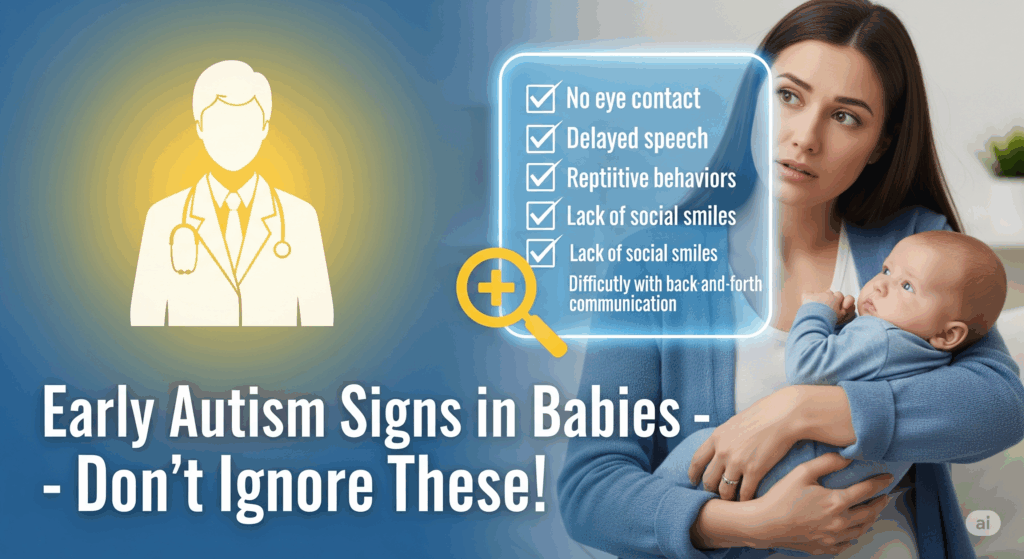
- Limited eye contact – Babies typically start making eye contact by 2-3 months. Infants who later develop ASD may avoid eye contact or seem disinterested in faces.
- No social smiling – Most babies smile responsively by 3-6 months. A lack of reciprocal smiling could be an early indicator.
- Does not respond to name – By 9-12 months, babies usually turn when called. Infants with ASD may not react to their name consistently.
2. Delayed or Unusual Communication
- Limited babbling – Babies usually coo by 2 months and babble (e.g., “ba-ba,” “da-da”) by 6-9 months. Delayed or absent babbling may be a concern.
- No gestures – By 10-12 months, babies typically wave, point, or reach to communicate. A lack of these gestures may signal a developmental delay.
3. Repetitive Behaviors or Sensory Differences
- Unusual body movements – Repetitive motions like arm-flapping, stiffening, or excessive rocking may appear.
- Sensory sensitivities – Over- or under-reacting to sounds, textures, or lights can be an early sign.
4. Differences in Play and Interaction
- Prefers objects over people – May focus intensely on toys rather than engaging with caregivers.
- Does not imitate actions – Most babies mimic facial expressions or sounds by 9 months.
Note: Some infants may show regression—losing skills they previously had, such as babbling or responding to their name.
Section 2: Red Flags in Toddlers (12-24 Months)
As children grow, autism symptoms often become more noticeable. Key red flags include:
1. Social Communication Challenges
- Limited speech – No single words by 16 months or no two-word phrases by 24 months.
- Echolalia – Repeating words without meaning (e.g., echoing TV phrases).
- Difficulty with pretend play – Does not engage in imaginative games (e.g., feeding a doll).
2. Behavioral and Sensory Signs
- Repetitive behaviors – Lining up toys, spinning objects, or hand-flapping.
- Extreme routines – Distress over small changes in daily activities.
- Unusual sensory responses – Covering ears at normal sounds or avoiding certain textures.
3. Social Interaction Differences
- Does not seek comfort when upset – May not come to parents for hugs or reassurance.
- Limited interest in peers – Prefers to play alone rather than with other children.
Section 3: Diagnosis of Autism in Infants and Toddlers
1. Developmental Screening
Pediatricians conduct routine screenings at 9, 18, and 24 months using tools like:
- M-CHAT (Modified Checklist for Autism in Toddlers) – A parent questionnaire assessing autism risk.
- ASQ (Ages and Stages Questionnaire) – Evaluates overall development.
2. Comprehensive Diagnostic Evaluation
If screening suggests autism, a specialist (developmental pediatrician, neurologist, or psychologist) conducts further assessments:
- ADOS-2 (Autism Diagnostic Observation Schedule) – Observes social and communication behaviors.
- ADI-R (Autism Diagnostic Interview-Revised) – Detailed parent interview about the child’s development.
3. Early Diagnosis Challenges
- Variability in symptoms – Some children show clear signs early, while others develop typically before regressing.
- Misdiagnosis – Symptoms may overlap with speech delays or sensory processing disorder.
Early diagnosis is crucial—research shows that intervention before age 3 leads to better outcomes.
Section 4: Next Steps After an Autism Diagnosis
Receiving an autism diagnosis can be overwhelming, but early action can make a significant difference.
1. Early Intervention Programs
- Early Start Denver Model (ESDM) – Play-based therapy for toddlers.
- ABA (Applied Behavior Analysis) – Focuses on improving social and communication skills.
- Speech and Occupational Therapy – Helps with language delays and sensory challenges.
2. Creating a Supportive Home Environment
- Structured routines – Predictability helps reduce anxiety.
- Visual supports – Picture schedules can aid communication.
- Sensory-friendly spaces – Soft lighting, noise-canceling headphones, or textured toys.
3. Connecting with Resources
- Early Intervention (EI) Services – Free or low-cost therapies (U.S. Part C programs).
- Parent Support Groups – Organizations like Autism Speaks or local ASD communities.
- Educational Planning – Working with schools to create an IEP (Individualized Education Program).
4. Monitoring Progress
- Regular follow-ups with specialists.
- Tracking developmental milestones and adjusting therapies as needed.
Section 5: Hope and Long-Term Outlook
While autism is a lifelong condition, early intervention can help children:
- Develop communication and social skills.
- Improve adaptive behaviors (e.g., self-care, school readiness).
- Build strengths in areas like memory, attention to detail, or creativity.
Success stories: Many children with autism thrive with the right support, attending mainstream schools, forming friendships, and leading fulfilling lives.
Conclusion
Recognizing early signs of autism in infants and toddlers allows for prompt intervention, which can significantly improve developmental outcomes. If you notice any red flags, consult a pediatrician for screening and evaluation.
Key Takeaways:
✅ Monitor social, communication, and behavioral milestones.
✅ Seek professional evaluation if concerns arise.
✅ Start early intervention as soon as possible.
✅ Build a supportive network of therapists, educators, and other parents.
Every child with autism is unique, and with the right support, they can reach their full potential.