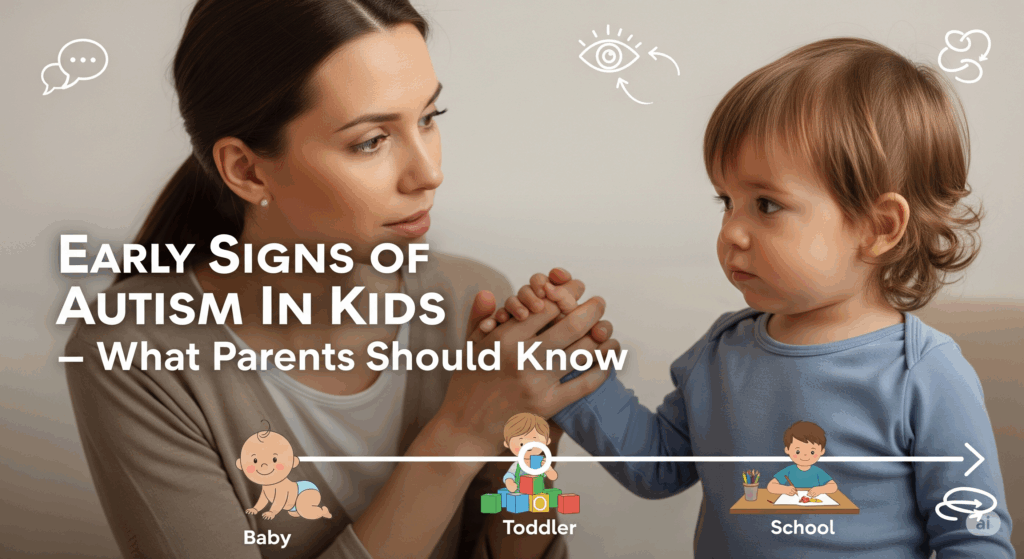
Autism spectrum disorder (ASD) is a neurodevelopmental condition that affects social skills, communication, behavior, and learning. Early identification of autism signs is crucial because timely interventions can significantly improve a child’s developmental outcomes.
But when do kids show signs of autism? The answer varies—some children display early indicators in infancy, while others may not show clear signs until toddlerhood or later.
In this article, we’ll explore the early signs of autism across different age groups, helping parents and caregivers recognize potential red flags and seek professional guidance when needed.
When Do Kids Show Signs of Autism? Key Indicators by Age
1. Infants (0-12 Months)
In the first year, signs of autism can be subtle but may include:
- Lack of eye contact – Babies typically make eye contact by 3 months, but infants with autism may avoid it.
- Limited social smiling – By 6 months, most babies smile in response to faces, but autistic infants may not engage in social smiling.
- Delayed response to name – By 6-9 months, babies usually respond when called; autistic infants may not react.
- Reduced babbling or gestures – Many babies wave, point, or babble by 9-12 months, but delays in these milestones could be early signs.
- Unusual sensory reactions – Some infants may overreact or underreact to sounds, textures, or lights.
2. Toddlers (1-3 Years)
More noticeable signs often emerge between 18-24 months, including:
- Speech delays – Many toddlers with autism do not speak by age 2 or have limited words.
- Repetitive behaviors – Hand-flapping, rocking, spinning objects, or lining up toys in a specific way.
- Limited social interaction – Prefers playing alone, avoids eye contact, or doesn’t engage in pretend play.
- Difficulty with changes – Gets upset over minor routine changes (e.g., different bedtime rituals).
- Unusual play habits – Focuses intensely on parts of toys (e.g., spinning wheels instead of playing with the whole car).
3. Preschoolers (3-5 Years)
By this stage, autism signs become more pronounced, such as:
- Difficulty with pretend play – Struggles with imaginative games (e.g., feeding a doll, playing house).
- Challenges in social settings – Doesn’t understand sharing, taking turns, or making friends.
- Speech and communication issues – May repeat phrases (echolalia), speak in a monotone, or struggle with conversations.
- Sensory sensitivities – Strong reactions to sounds, textures, lights, or smells.
- Rigid routines – Insists on doing things the same way every time and resists changes.
4. School-Aged Children (6-12 Years)
In school, autism traits may become more evident in social and academic settings:
- Social isolation – Difficulty making friends or understanding social cues (e.g., sarcasm, jokes).
- Repetitive behaviors – Continues rocking, hand-flapping, or strict adherence to routines.
- Academic struggles – May excel in rote memorization but struggle with abstract thinking or group work.
- Emotional regulation challenges – May have meltdowns when overwhelmed or frustrated.
- Literal thinking – Takes language very literally and struggles with metaphors or implied meanings.
When Should Parents Seek Help?
If you notice multiple signs of autism in your child, consult a pediatrician or a developmental specialist. Early intervention (speech therapy, occupational therapy, behavioral therapy) can make a significant difference.
Key Takeaways:
- Autism signs can appear as early as 6-12 months.
- Delayed speech, lack of eye contact, and repetitive behaviors are common red flags.
- Early diagnosis and intervention lead to better long-term outcomes.
If you suspect your child may have autism, don’t wait—seek professional evaluation. The sooner support begins, the better the chances for progress.