
Introduction
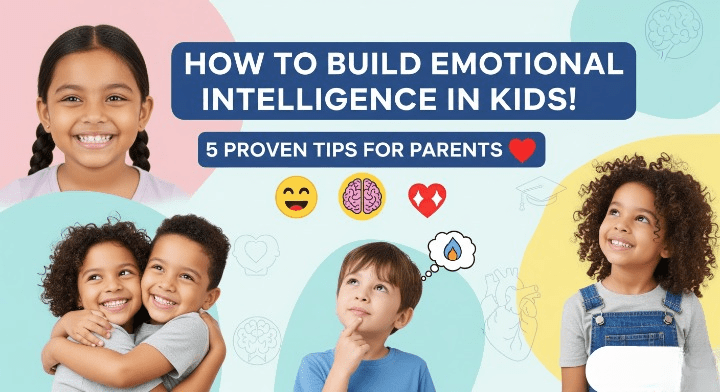
Emotional intelligence (EQ) is a crucial aspect of a child’s overall development, shaping their ability to understand, manage, and express emotions effectively. While academic success is often prioritised, emotional intelligence plays an equally important role in a child’s long-term happiness and success. At Omkilkari Child Development Centre, Varanasi, we believe that nurturing emotional intelligence from an early age helps children build resilience, form healthy relationships, and thrive in all aspects of life.
In this comprehensive guide, we will explore:
- What emotional intelligence is and why it matters
- Signs of strong vs. weak emotional intelligence in children
- Practical strategies for parents to foster EQ at home
- Common challenges and solutions in developing emotional intelligence
- The lifelong benefits of a strong EQ foundation
What Is Emotional Intelligence in Children?
Emotional intelligence consists of five key components:
- Self-awareness – Recognising and understanding one’s own emotions.
- Self-regulation – Managing emotions in a healthy way.
- Motivation – Using emotions to stay persistent and goal-oriented.
- Empathy – Understanding and sharing others’ feelings.
- Social skills – Building positive relationships and resolving conflicts.
Children with high emotional intelligence can identify their emotions, control impulsive reactions, show kindness to others, and communicate effectively.
Why Is Emotional Intelligence Important for Kids?
Research shows that children with strong EQ:
- Perform better academically due to improved focus and problem-solving skills.
- Have healthier relationships with peers and family.
- Handle stress and setbacks more effectively.
- Develop greater self-confidence and resilience.
At Omkilkari Child Development Centre, Varanasi, we integrate EQ-building activities into our curriculum to ensure children grow into emotionally balanced individuals.
Signs of Strong vs. Weak Emotional Intelligence in Children
High Emotional Intelligence
- Expresses emotions clearly and appropriately.
- Calms down quickly after frustration.
- Shows empathy and kindness to others.
- Handles conflicts maturely.
- Forms strong, lasting friendships.
Low Emotional Intelligence
- Struggles to identify or articulate emotions.
- Has frequent tantrums or emotional outbursts.
- Finds it hard to understand others’ feelings.
- Acts impulsively in stressful situations.
If your child shows signs of low EQ, don’t worry—emotional intelligence can be nurtured with the right strategies.
How to Develop Emotional Intelligence in Your Child
1. Encourage Open Communication
- Create a safe space for your child to express feelings.
- Use open-ended questions: “How did that make you feel?”
- Avoid dismissing emotions—validate them instead.
2. Model Emotional Awareness
- Demonstrate healthy emotional expression.
- Example: “I’m feeling a bit stressed, so I’ll take deep breaths to calm down.”
3. Help Your Child Name Their Emotions
- Use emotion charts or storytelling to teach feeling words.
- Instead of saying “Stop crying,” say “I see you’re sad. Let’s talk about it.”
4. Teach Empathy Through Everyday Activities
- Role-play different scenarios: “How would you feel if someone took your toy?”
- Encourage acts of kindness, like helping a friend in need.
5. Promote Problem-Solving Skills
- Guide children through conflict resolution steps:
- Identify the problem.
- Brainstorm solutions.
- Choose the best option.
- Example: If siblings argue over a toy, encourage sharing or taking turns.
Common Challenges and Solutions
1. Child Bottles Up Emotions
- Solution: Create a judgment-free zone. Say, “It’s okay to feel upset. I’m here to listen.”
2. Frequent Emotional Outbursts
- Solution: Teach calming techniques like deep breathing or using a “calm-down corner.”
3. Struggles with Empathy
- Solution: Read books/watch movies about emotions and discuss them.
The Lifelong Impact of Emotional Intelligence
Children who develop strong EQ grow into adults who:
- Excel in teamwork and leadership.
- Maintain healthier relationships.
- Adapt better to life’s challenges.
At Omkilkari Child Development Centre, Varanasi we are committed to fostering emotional intelligence alongside academic growth. Our programs are designed to help children thrive emotionally and socially.
Conclusion
Emotional intelligence is not fixed—it can be developed with patience and the right approach. By practicing open communication, modelling emotional awareness, and teaching empathy, parents can equip their children with skills that last a lifetime.