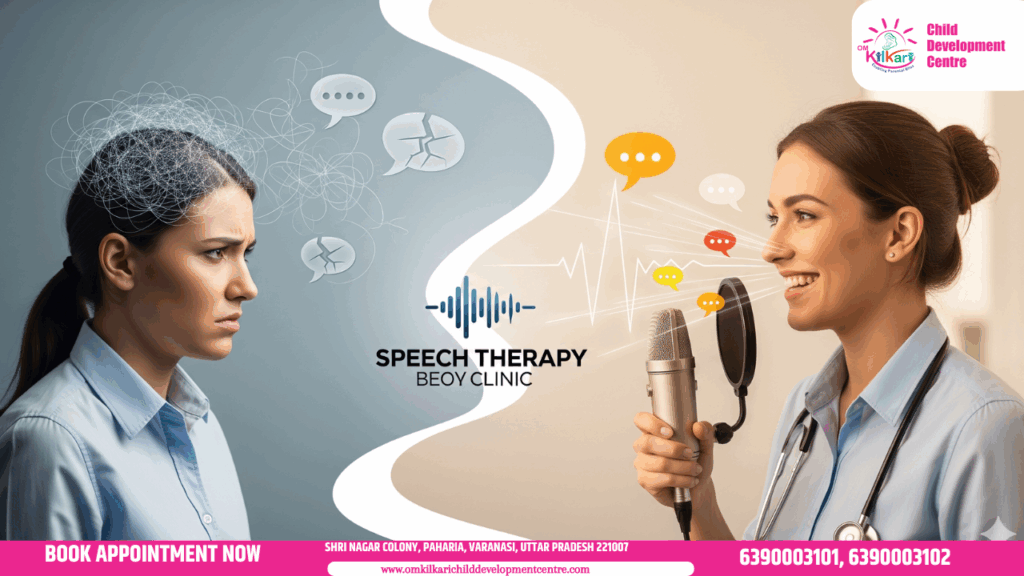
Imagine the frustration of having a brilliant idea trapped in your mind, unable to find its voice. Picture a child, eager to share a story with friends, but whose words are met with confused stares. Consider the isolation of an elder who, after a stroke, struggles to ask for a glass of water. Communication is the bedrock of human connection—it’s how we share love, conduct business, learn, and build communities. When this fundamental ability is impaired, it doesn’t just affect speech; it impacts confidence, relationships, academic achievement, and professional growth.
In the bustling, family-oriented urban landscape of Dwarka, Sub-City, the need for accessible, high-quality healthcare is paramount. Among these essential services, speech therapy stands out as a transformative discipline, yet it is often misunderstood. It is not merely about “correcting a lisp” or “fixing a stutter.” Modern speech-language therapy is a sophisticated field of rehabilitative science that addresses a vast spectrum of communication and swallowing disorders across all ages.
This article delves deep into the world of speech therapy available right here in Dwarka. We will explore what it truly entails, the myriad conditions it can address, the profound impact it has on individuals and families, and how to find the right speech-language pathologist (SLP) to embark on a journey toward transformative communication.
Part 1: Understanding Speech-Language Therapy – Beyond Elocution
What is Speech Therapy?
Speech therapy is an evidence-based practice aimed at diagnosing, evaluating, and treating speech, language, voice, fluency, cognitive-communication, and swallowing disorders. A qualified professional, known as a Speech-Language Pathologist (SLP) or speech therapist, works with individuals to develop personalized strategies and exercises to improve their communication abilities.
It’s crucial to distinguish between the different facets of communication they address:
- Speech Disorders: These relate to the physical production of sounds.
- Articulation Disorders: Difficulty forming specific speech sounds correctly (e.g., saying “wabbit” for “rabbit”).
- Phonological Disorders: Patterns of sound errors, such as dropping all ending consonants.
- Motor Speech Disorders (Dysarthria & Apraxia): Problems related to the neurological control of the muscles used for speech. Apraxia is a planning issue, while dysarthria is a muscular weakness issue, often seen after neurological events like a stroke.
- Fluency Disorders: Interruptions in the flow of speech, such as stuttering (repetitions, prolongations) or cluttering (rapid, erratic speech).
- Voice Disorders (Dysphonia): Issues with pitch, volume, or quality of voice that are atypical for a person’s age, gender, or cultural background. This can include hoarseness, vocal strain, or complete voice loss.
- Language Disorders: These relate to the understanding and use of words and grammar.
- Receptive Language Disorders: Difficulty understanding or processing what others are saying.
- Expressive Language Disorders: Difficulty putting words together, having a limited vocabulary, or being unable to use language in a socially appropriate way.
- Pragmatic Language Disorders: Challenges with the social aspects of communication, like taking turns in conversation, understanding sarcasm, or maintaining eye contact. This is a core difficulty in Autism Spectrum Disorder (ASD).
- Swallowing Disorders (Dysphagia): Difficulty swallowing food or liquids safely and efficiently, which can lead to malnutrition, dehydration, and aspiration pneumonia.
- Cognitive-Communication Disorders: Problems with communication skills that involve memory, attention, perception, organization, regulation, and problem-solving. These are common after Traumatic Brain Injury (TBI) or in conditions like dementia.
The Role of the Speech-Language Pathologist (SLP)
An SLP is a highly trained professional, typically holding a Master’s degree and requiring certification and licensure to practice. They are not just tutors; they are healthcare professionals who:
- Conduct comprehensive assessments to diagnose the type and severity of a disorder.
- Develop individualized treatment plans (IEPs in schools, ITPs in clinics).
- Provide one-on-one or group therapy using specialized techniques.
- Educate and counsel families and caregivers on how to support progress at home.
- Collaborate with other professionals like doctors, dentists, occupational therapists, psychologists, and teachers.
Part 2: The Transformative Impact: Who Can Benefit in Dwarka?
Dwarka’s diverse demographic, from young families to a growing senior population, means the need for speech therapy is wide-ranging. Here’s how it transforms lives at different stages.
1. For Children: Building the Foundation for Success
Early intervention is critical. The brain’s neuroplasticity is at its peak in the early years, making it the ideal time to address communication challenges.
- Speech Sound Disorders: Therapy helps children produce sounds correctly, making them more understandable to peers and teachers, which reduces frustration and behavioral issues.
- Language Delays and Disorders: SLPs work to expand vocabulary, teach grammatical structures, and improve narrative skills. This directly translates to better performance in school—in reading comprehension, writing, and overall academic confidence. For a child in a competitive academic environment like many schools in Dwarka, this support can be life-changing.
- Autism Spectrum Disorder (ASD): SLPs are core members of the intervention team for children with ASD. They focus on developing functional communication (whether verbal or through AAC devices), teaching social skills (like turn-taking and understanding emotions), and addressing restrictive eating habits often linked to sensory aversions.
- Stuttering (Child-Onset Fluency Disorder): Therapy provides children with strategies to manage disfluencies, reducing anxiety around speaking. It also involves counseling parents on how to create a supportive communication environment at home.
- Listening and Spoken Language (for Hearing Impairment): For children with cochlear implants or hearing aids, SLPs play a vital role in auditing the device and teaching the child to interpret sound and develop spoken language.
2. For Adults: Reclaiming Voice and Career
Communication is inextricably linked to professional and social identity.
- Accent Modification: While not a “disorder,” many professionals in Dwarka—home to a large population of corporate employees, government officials, and immigrants—seek accent modification training. SLPs can teach the motor and rhythmic patterns of neutral English (or other languages) to enhance professional clarity and intelligibility in a global workplace.
- Voice Therapy: Teachers, call center executives, singers, and lawyers are among the many “professional voice users” in Dwarka who rely on their voices for their livelihood. Therapy for chronic hoarseness, vocal nodules, or muscle tension dysphonia teaches vocal hygiene and healthy projection techniques to prevent strain and damage.
- Stuttering (Adult): Adult stuttering can be a significant barrier to career advancement and social comfort. Therapy focuses on mastering fluency-shaping and stuttering-modification techniques, alongside intensive counseling to manage associated anxiety and build self-esteem.
- Transgender Voice and Communication Training: SLPs provide affirming therapy to help individuals align their communication (pitch, resonance, intonation, and nonverbal cues) with their gender identity.
3. For Seniors: Preserving Dignity and Connection
With a growing senior population in Dwarka’s many housing societies, geriatric speech therapy is a critical service.
- Aphasia: Often caused by a stroke, aphasia impairs the ability to understand or express language. Therapy is vital for helping seniors reconnect with their families, express their needs, and participate in decision-making, thereby preserving their dignity and autonomy.
- Dysarthria: Weakness in the speech muscles, common after a stroke or in conditions like Parkinson’s disease, can make speech slurred and quiet. SLPs use techniques to strengthen muscles and improve clarity.
- Cognitive-Communication Disorders: In cases of dementia or post-stroke, therapy focuses on using compensatory strategies (like memory notebooks) to maintain independence and safety for as long as possible.
- Swallowing Disorders (Dysphagia): This is a major health concern for seniors. SLPs perform diagnostic tests like videofluoroscopic swallow studies (VFSS) and design therapy plans that may include exercises and diet modifications (thickening liquids) to ensure safe swallowing and prevent life-threatening aspiration.
Part 3: The Speech Therapy Process: What to Expect in Dwarka
If you suspect you or a loved one needs therapy, understanding the process can alleviate anxiety.
- Initial Contact and Screening: You will call a clinic or practitioner in Dwarka. They will ask preliminary questions to understand your concerns.
- Comprehensive Assessment: This is a crucial first step. The SLP will use standardized tests, informal observations, and interviews to get a full picture of strengths and challenges. This may involve:
- Oral-motor exams (checking the strength and coordination of speech muscles).
- Articulation and language testing.
- Voice and fluency evaluations.
- Swallowing assessments.
- Diagnosis and Goal Setting: The SLP will explain their findings and provide a clear diagnosis. Together, you will set realistic, measurable goals (e.g., “The client will produce the /r/ sound in conversation with 90% accuracy”).
- Therapy Sessions: Therapy is active and participatory. Sessions are typically 45-60 minutes, 1-2 times per week. They are not passive lessons; the SLP will guide you through evidence-based exercises, which may look like games for children or structured practice for adults. Family involvement is key to success.
- Home Programs and Carryover: Progress happens fastest when practice continues at home. Your SLP will provide specific exercises and strategies to integrate into daily routines.
- Re-evaluation and Discharge: Progress is regularly monitored. Once goals are met, the client is discharged with strategies to maintain their new skills.
Part 4: Finding the Right Speech Therapist in Dwarka: A Practical Guide
Dwarka boasts a growing number of qualified SLPs practicing in multi-specialty clinics, child development centers, hospitals, and private practices. Here’s how to choose the right one:
- Credentials are Paramount: Ensure the therapist is certified (holding an RCI license in India) and has a relevant Master’s degree (M.Sc. in Speech-Language Pathology). Don’t hesitate to ask about their qualifications.
- Experience with Specific Needs: An SLP who specializes in autism may not be the best fit for an adult with a voice disorder. Ask about their experience and success with your specific concern.
- Location and Logistics: Consider clinics in sectors like Sector 6, 7, 12, 13, 14, and 23, which are known hubs for healthcare services. Factor in travel time and availability of sessions (evening slots may be important for working parents).
- Initial Consultation: Use the first meeting to gauge your comfort level. Is the SLP a good listener? Do they explain things clearly? Is the environment welcoming, especially for a child?
- Clinic Facilities: For some issues, especially swallowing, access to advanced diagnostic tools (like VFSS) may be necessary. These are typically available in larger hospitals like Venkateshwar Hospital, Sri Balaji Action Medical Institute, or Apollo Hospitals which have dedicated rehabilitation departments.
- Reviews and Word-of-Mouth: Ask for recommendations from your pediatrician, physician, or within local Dwarka parent groups on social media. Personal testimonials can be very valuable.
Conclusion: Your Voice is Worth It
Communication is a human right. The inability to communicate effectively can feel like being locked in a glass box—seeing the world but unable to fully participate in it. Speech therapy is the key that unlocks that box.
Whether it’s for your toddler taking their first verbal steps, your teenager navigating social complexities, yourself as a professional aiming higher, or an aging parent you cherish, investing in speech and language skills is an investment in quality of life, confidence, and connection.
The resources are here, in our community of Dwarka. Take that first step. Reach out for a consultation. The journey may require effort and patience, but the destination—a world where every voice is heard and understood—is truly transformative.