
Evidence-Based Clinical Insights

Pediatric Knowledge Hub & Research

Medically verified clinical articles and parent education guides authored and reviewed by pediatric neurodevelopmental specialists under Dr. Sunil Kushwaha.

Biomechanical Rehabilitation Graphic बायोमैकेनिकल पुनर्वास आरेख

The 3-Stage NDT Movement Mechanism एनडीटी फिजियोथेरेपी की 3-चरणीय कार्यप्रणाली

How Neuro-Developmental Treatment (NDT / Bobath Approach) re-educates the neuromuscular system from spastic muscle tone to independent, balanced ambulation. जानिए कैसे एनडीटी (Bobath तकनीक) मांसपेशियों के अत्यधिक तनाव को कम करके मस्तिष्क में सही व संतुलित चाल का नया न्यूरोप्लास्टिक पैटर्न स्थापित करती है।

Stage 01 • Pathology

Muscle Spasticity & Equinus मांसपेशी जकड़न एवं पंजों पर चलना

Heightened stretch reflex and calf hypertonia restrict ankle dorsiflexion (< 0°), forcing persistent toe-walking, knee hyperextension, and loss of postural balance. मांसपेशियों में अत्यधिक तनाव से एड़ी नीचे नहीं टिकती और बच्चा पंजों के बल चलता है, जिससे संतुलन बिगड़ता है।

Biomechanical Barrier:
Restricted Joint Range & Fixed Ankle Contracture Risk
Challenge: Joint Restriction
Stage 02 • Facilitation

Rotational NDT Mobilization एनडीटी एक्सियल स्ट्रेचिंग व संरेखण

Certified therapist uses hands-on key points of control (pelvis, shoulder girdle, ankle) to introduce slow axial rotation, inhibiting spastic reflexes without forceful joint stress. हाथों द्वारा विशेष दबाव बिंदुओं से बिना दर्द के मांसपेशियों के तनाव को सामान्य करके जोड़ों की प्राकृतिक गतिशीलता बहाल की जाती है।

Active Clinical Technique:
Tone Inhibition via Proprioceptive Axial Loading
Intervention: Tone Normalization
Stage 03 • Outcome

Functional Heel-Strike Gait स्वतंत्र, संतुलित एवं स्वाभाविक चाल

Dynamic balance board, obstacle climbing, and ladder drills rewire corticospinal motor pathways before age 5, creating permanent plantigrade heel-to-toe walking. बैलेंस बोर्ड और सीढ़ी अभ्यास से मस्तिष्क में सही चाल का स्थायी न्यूरल पैटर्न स्थापित होता है और बच्चा स्वतंत्र चलता है।

Rehabilitation Goal:
Independent Plantigrade Ambulation & Stability
Outcome: Independent Ambulation
Pre-NDT State
  • Toe-walking (Equinus gait)
  • Hyperactive stretch reflexes
  • Frequent trips & falls
NDT Protocol
  • Bobath key point handling
  • Bilateral weight-bearing
  • Pelvic alignment mirrors
Long-Term Milestone
  • Heel-to-toe plantigrade gait
  • Reciprocal arm swing
  • Independent stair climbing
Early Signs of Autism vs ADHD Clinical Suite
Clinical Diagnostics 7 Min Read

Early Signs of Autism vs ADHD in Toddlers: Clinical Differences

Direct Clinical Summary: While Autism and ADHD can share symptoms like attentional drift and emotional meltdowns, Autism is characterized by reciprocal social communication challenges and repetitive behaviors, whereas ADHD stems primarily from executive dysfunction and impulse control deficits.

1. Social Reciprocity vs. Inattentiveness

In Autism Spectrum Disorder (ASD), a child may show limited joint attention, reduced gaze-shifting, or absent pointing to share interest by 14 months. In contrast, a child with ADHD typically understands social cues and makes eye contact readily, but their attention drifts rapidly because of low dopamine-driven focus sustainability.

2. Sensory Overload vs. Dopamine Seeking

An autistic meltdown is frequently triggered by sensory overwhelm (intense noise, fluorescent lighting, tactile tags), whereas ADHD outbursts usually result from low frustration tolerance, boredom, or difficulties with task transitions.

3. When to Seek Assessment

Early standardized evaluations using the ADOS-2 (for Autism) and Conners-4 (for ADHD) provide objective clarity before school age, allowing for tailored early therapy planning under Dr. Sunil Kushwaha.
Speech Delay vs Delayed Milestones Clinical Suite
Speech Pathology 6 Min Read

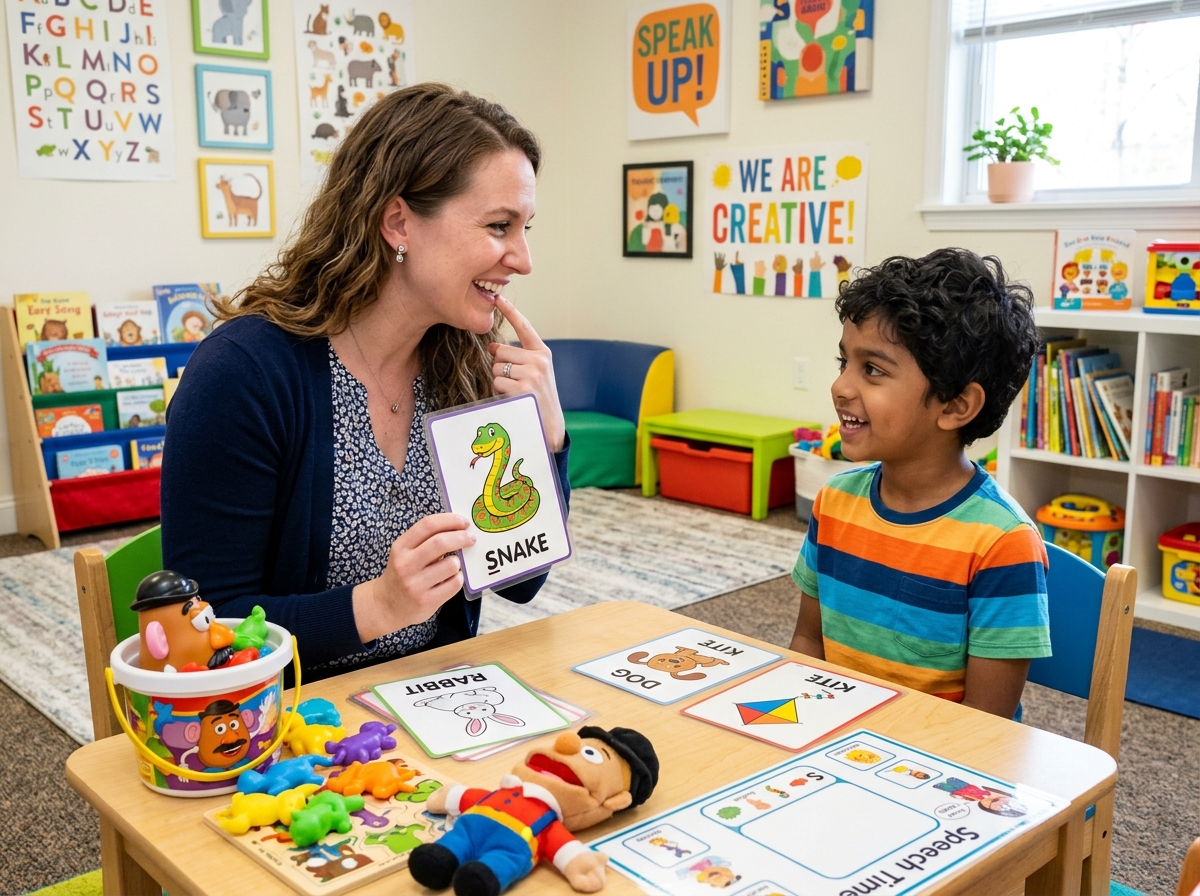
Speech Delay in Toddlers: When Is Speech Therapy Necessary?

Direct Clinical Summary: Speech therapy is recommended when a child fails to meet fundamental communication milestones, such as lacking single functional words by 18 months or having fewer than 50 words with two-word combinations by 24 months.

1. Developmental Timeline (12–36 Months)

  • 12 Months: Canonical babbling (ba-ba, da-da), responding to name, waving goodbye.
  • 18 Months: Minimum 6–10 distinct single words, pointing to objects when asked.
  • 24 Months: 50+ spontaneous words, 2-word combinations ("want milk", "big car").
  • 36 Months: 3-4 word sentences, 75% speech intelligible to unfamiliar listeners.

2. The "Wait and See" Risk

Waiting past 24 months to address expressive delays often increases toddler frustration, leading to temper tantrums and delaying socialization with peers. Early intervention accelerates speech sound acquisition rapidly.

3. At-Home Language Scaffolding

Parents can facilitate language expansion by narrating daily routines, offering forced choices ("Do you want apple or banana?"), and pausing intentionally to allow the child to formulate responses.

Home Sensory Diets for ASD & ADHD Clinical Suite
Occupational Therapy 8 Min Read

Evidence-Based Home Sensory Diets for ASD & ADHD

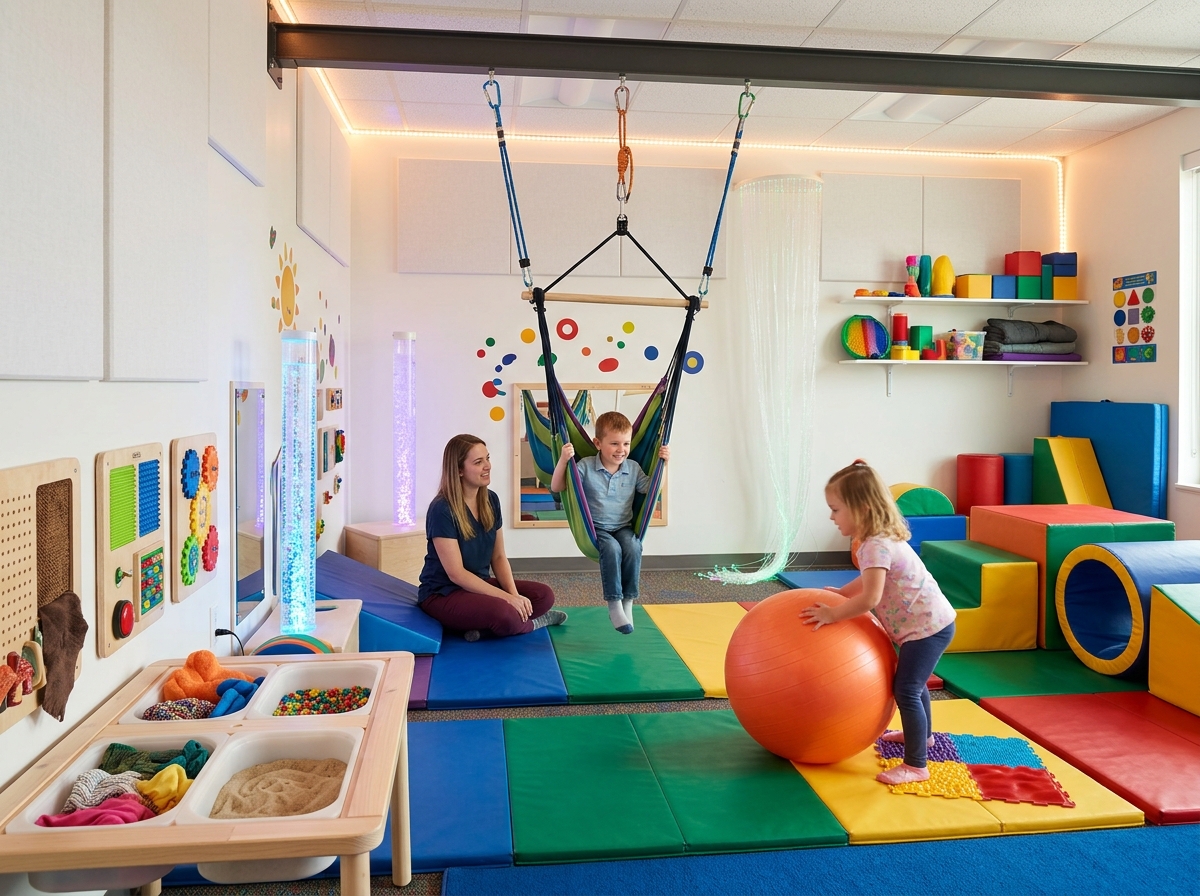
Direct Clinical Summary: A home sensory diet is a structured schedule of personalized physical activities designed to provide the specific vestibular, proprioceptive, and tactile inputs a child needs to maintain a regulated nervous system.

1. Proprioceptive "Heavy Work" Activities

Proprioception provides joint and muscle feedback that calms the central nervous system. Recommended daily activities include carrying laundry baskets, animal walks (bear crawl, crab walk), and pushing against walls.

2. Vestibular Calming Strategies

Linear back-and-forth rocking and gentle suspended swinging help de-escalate high arousal states, whereas erratic spinning should be avoided close to bedtime.

3. Creating a Calming Corner

Designate a low-stimulation nook at home with soft floor pillows, weighted lap pads, noise-reducing headphones, and dim lighting to give children a safe retreat during sensory overload.

Pencil Grip & Fine Motor Strength Clinical Suite
Fine Motor Development 5 Min Read

Improving Pencil Grip & Fine Motor Strength in Children

Direct Clinical Summary: Efficient pencil grasp relies on the progressive development of hand arches, wrist stability, and isolated finger movements, which can be improved through focused occupational therapy exercises.

1. Developmental Pencil Grip Progression

Children transition from a palmar supinate grasp (fist, 1-2 yrs) to digital pronate (fingers down, 2-3 yrs), static tripod (3-4 yrs), and finally a mature dynamic tripod grasp (4-6 yrs) with isolated finger control.

2. Fine Motor Strengthening Activities

Strengthen intrinsic hand muscles through therapeutic playdough squeezing, clothespin pinching, bead stringing, and vertical chalkboard coloring to naturally promote wrist extension.

3. Recognizing Dysgraphia

If a child experiences hand cramps, excessive paper tearing from grip pressure, or severe letter size inconsistency past age 6, clinical OT intervention for dysgraphia is indicated.

NDT Physiotherapy for Cerebral Palsy Clinical Suite
Pediatric Physiotherapy 7 Min Read

How NDT Physiotherapy Improves Mobility in Cerebral Palsy

Direct Clinical Summary: Neuro-Developmental Treatment (NDT) uses hands-on facilitation to inhibit abnormal movement patterns and assist children with Cerebral Palsy in developing symmetrical posture and independent walking balance.

1. The Biomechanics of Spasticity

In spastic Cerebral Palsy, heightened muscle tone restricts joint mobility. NDT utilizes slow rotational stretching and key points of control to normalize muscle tone before functional gait training.

2. Treating Persistent Toe-Walking

NDT corrects toe-walking by lengthening the gastrocnemius-soleus complex, strengthening anterior tibialis muscles, and facilitating active heel-strike balance reactions.

3. Neuroplasticity Windows

Starting gross motor physiotherapy before age 5 leverages malleable neural pathways, helping prevent joint contractures and maximizing long-term functional ambulation under Dr. Sunil Kushwaha.

Call: +91-9511113060 Chat on WhatsApp